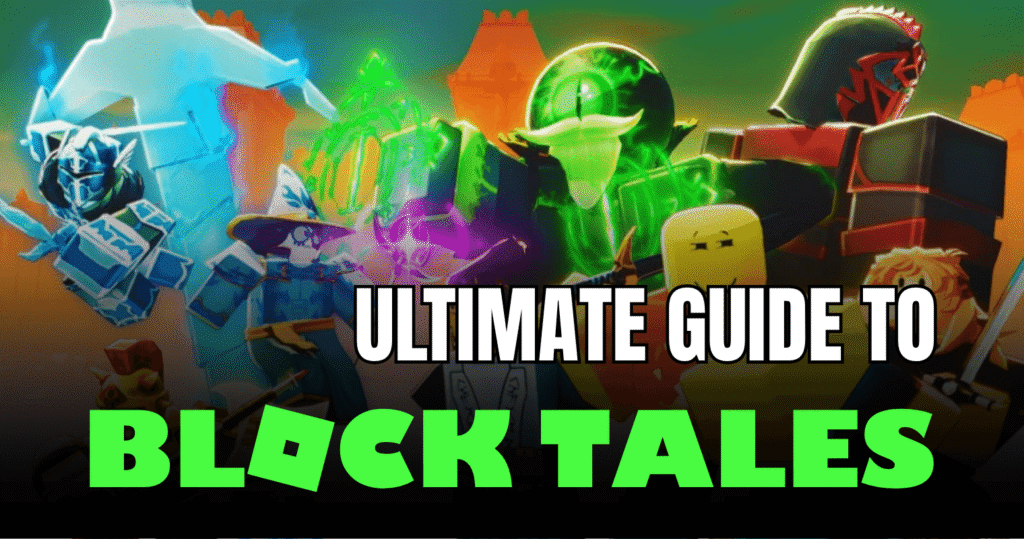
Block Tales is a charming retro-style turn-based RPG on Roblox that captures the spirit of classic 2010-era adventures with pixelated vibes, clever humor, and nostalgic nods to old Roblox experiences like Sword Fight on the Heights. Players step into the role of a character sent back in time, embarking on a quest to collect legendary swords while battling quirky enemies and bosses through hand-crafted chapters filled with exploration, puzzles, and strategic combat. Inspired heavily by games like Paper Mario and EarthBound, it blends overworld exploration with timed action commands, card-based abilities, and a rolling health system that keeps fights dynamic and engaging.
This guide walks you through everything from your first steps in the demo to tackling later chapters, covering core mechanics, progression tips, and hidden details that can give you an edge. Whether you’re a complete newcomer or pushing toward endgame builds, you’ll find clear strategies to level efficiently, optimize your card deck, and master combat timing.
By following this resource, new players can avoid common early pitfalls—like wasting Build Points or missing key items—while advanced players discover optimization routes, strong synergies, and lesser-known interactions that speed up progression through the story’s chapters. Block Tales rewards careful exploration and smart decisions, and this guide helps you make the most of them without frustration.
Game Information
| Detail | Information |
|---|---|
| Game Name | Block Tales (Block Tales: Swords of Time) |
| Developer | Spaceman Moonbase |
| Platform | Roblox |
| Genre | Adventure / Turn-based RPG |
| Release Date | February 23, 2024 (initial publish); ongoing demos with Chapter 5 and story rewrite in 2025-2026 |
| Players | Multiplayer (co-op elements with parties) |
Getting Started
Launch the game via the Roblox page and jump straight into the prologue or current demo. Your character wakes up in a nostalgic 2010-style world and receives the main quest from key NPCs like Shedletsky or the Elder Penguin to retrieve the iconic swords.
Essential first steps:
- Complete the tutorial battle to learn basic attack timing (press spacebar or click at the right moment for stronger hits or “superguards” that reduce or nullify damage).
- Explore the starting area thoroughly—talk to every NPC, as many offer items, hints, or side interactions.
- Check your menu early for inventory, equipped cards, and stats (HP for health, SP for special abilities, BP for card slots).
- Look for hidden items in the overworld; some are off the beaten path or require simple platforming/dashing.
- Join the official Spaceman Moonbase group if it offers any perks or easier party formation for multiplayer sessions.
There aren’t traditional “summon” systems or heavy gacha elements; progression relies on exploration, enemy defeats for EXP, and collecting Cards (which act as attacks, heals, buffs, or weapon enhancers). Start with basic weapons like the sword and experiment with early cards. A solid beginner tip: focus on timing your attacks perfectly in the overworld to weaken or defeat enemies before they initiate full battles—this saves resources and speeds up leveling.
Prioritize HP upgrades on early levels for survivability, then balance with SP for more card usage and BP to equip stronger abilities.
Progression & Leveling Roadmap
Block Tales advances through story chapters (currently up to Chapter 5 with a story rewrite), each introducing new areas, enemies, bosses, and swords to collect. Early chapters like “Storming the Castle” (Chapter 1) teach fundamentals, while later ones ramp up puzzle complexity and boss mechanics.
Optimal path:
- Clear main quests and bosses in sequence to unlock new zones naturally.
- Farm EXP by defeating overworld enemies or entering battles—level caps increase per chapter (e.g., around level 6-12 in early sections, scaling higher later).
- On level-up, choose between +5 HP, +5 SP, or +3 BP. For beginners, lean toward HP early, then BP for deck flexibility, and SP for sustained fights.
- Collect Tix or other currencies from shops/enemies to buy healing items and gear.
Efficient farming involves revisiting cleared areas for respawning enemies or using action commands to clear groups quickly. Explore every corner for hidden chests, keys, and cards that provide permanent advantages. Multiplayer parties can help tackle tougher bosses faster through coordinated card plays.
Core Gameplay Mechanics
Combat System: Battles are turn-based with real-time action commands. Select actions like Attack, Defend, or use Cards (which cost SP). Timing matters—perfect hits deal bonus damage, while superguards (precise defense) can counter or reduce incoming attacks. Enemies have varied patterns; learn to exploit weaknesses with elemental or status effects.
Weapons occupy slots (sword, ball, launcher, slingshot, etc.), and cards enhance or replace them. The rolling HP meter (EarthBound-style) adds tension as health ticks down visibly.
Cards & Build Points (BP): Cards are the heart of customization. They provide attacks, heals, buffs, or special effects and cost BP to equip (max BP around 30). Discover them through exploration, quests, or bosses. Synergies are key—some cards boost specific weapons or apply status like poison/burn.
Stats & Leveling: HP (health), SP (special points for cards), BP (card capacity). No traditional “buildings” or base-building; focus is on personal progression and party management in multiplayer.
Overworld movement includes dashing for faster travel (there’s a trick to move even quicker by combining inputs—experiment with momentum).
Special Systems & Resources
Cards function as the primary “summon”-like system: collect dozens for different builds. Some heal the party, others deal multi-hit damage or apply debuffs.
Items: Consumables like bombs for area damage, healing pads in safe zones, and beds for full recovery. Hidden items appear in puzzles or secret spots.
No rebirths or fruits in the classic sense, but progression unlocks better weapons (e.g., Ice Dagger, Venom Shank, Firebrand) with unique effects like healing on hit or applying burn/poison.
Multiplayer Parties: Invite friends to form parties for shared battles, making tough encounters easier through combined card strategies.
Efficiency tip: Prioritize cards that offer utility (heals + damage) over pure offense early on.
Maps, Stages, & Progression Unlocks
The world unfolds across chapters with distinct themes:
- Chapter 1: Storming the Castle — Puzzles like number codes from prisoner dialogue; collect the first sword.
- Later chapters introduce toxic areas, Halloween vibes, deserts, skies, and more with escalating boss fights.
Access higher stages by completing prior chapters and main quests. Special events or limited-time content may appear with updates (e.g., story rewrites adding cutscenes and new enemy moves). No strict “waves,” but boss encounters serve as major gates.
Explore side paths for optional rewards that ease progression.
Tips, Strategies & Best Practices
- Resource Balancing: Don’t hoard items—use heals proactively. Farm Tix for shops.
- Defense: Master superguarding to minimize damage and turn fights in your favor.
- Farming: Clear overworld enemies with timed attacks for quick EXP. Revisit areas post-chapter for better drops.
- Combat Strategies: Build around your favorite weapon slot. For example, sword builds excel with damage multipliers; ball/launcher for crowd control.
- Prioritization: Early game—survivability and BP for more cards. Mid-to-late—synergistic decks that exploit enemy weaknesses.
- Risk management: Save before tough bosses; use defend turns wisely to restore SP.
For endgame, experiment with tanky builds (high HP + counter cards) or high-DPS setups (stacking multipliers on sword attacks).
Events, Schedules & Special Spawns
Block Tales receives regular demo updates with new chapters, story rewrites, and quality-of-life improvements. Watch for admin or community events that might introduce temporary multipliers, exclusive cards, or boss variants. Rare spawns or hidden NPCs can appear in specific conditions (e.g., time of day or after certain flags).
Maximize opportunities by staying in active servers and checking patch notes via the developer group or Discord. No fixed daily schedules, but updates often bring fresh content that resets exploration value.
Combat Paths, Styles, or Masteries
Weapons define your “style”:
- Sword: Reliable single-target or multi-hit with timing combos; great for boss DPS.
- Ball/Launcher/Slingshot: Area or projectile focus for crowd control or ranged harassment.
Mastery comes from action command timing and card synergies. Beginner recommendation: Start sword-focused for simplicity, then branch into hybrid builds. Endgame paths include specialized decks (e.g., poison stacks, burn reduction, or full party support). Practice perfect timings consistently—small improvements compound into big advantages.
Additional Important Game Data
- Hidden Mechanics: Some puzzles rely on environmental clues (e.g., prisoner dialogue for codes). Overworld attacks can prevent battles entirely if timed well. There may be secret interactions with NPCs or environmental objects yielding rare cards/items.
- Stat Caps/Diminishing Returns: BP maxes at 30; focus upgrades wisely as chapters progress. No hard stat caps mentioned, but balanced distribution prevents fragility.
- Cooldowns/Timers: Card uses tie to SP regeneration (defend restores some). Healing pads and beds have reuse potential in safe areas.
- Passive Bonuses: Certain cards or weapons grant ongoing effects like auto-heals or debuff resistance.
- Inventory & Storage: Limited backpack space—manage consumables and prioritize key cards.
- Trading/Economy: Limited player trading; mostly NPC shops using in-game currency like Tix.
- Gamepasses Impact: Premium features (if any) may speed up progression or unlock cosmetics/QoL; check in-game for details.
- Update Patterns: Development is phased with demos adding ~50% completion milestones. Meta shifts with new cards/weapons—adapt builds accordingly. Community wikis and videos help track changes.
Diminishing returns aren’t heavily enforced, but over-investing in one stat early can hinder later chapters.
Frequently Asked Questions
How do I level up faster in Block Tales?
Defeat as many overworld enemies as possible using timed attacks, complete all side dialogues and puzzles for bonus EXP/items, and focus level-up choices on balanced stats. Revisit earlier areas after unlocking better movement or weapons.
What are the best early cards or builds?
Prioritize versatile cards that heal or boost basic attacks. Sword + Power Stab variants work well initially. Experiment in safe battles—BP is refundable when swapping cards.
How do I solve puzzles like the castle code?
Listen carefully to NPC dialogue for clues (e.g., numbers mentioned by prisoners). Many puzzles tie directly into story interactions.
Can I play multiplayer, and does it help?
Yes—form parties for shared battles. Co-op makes bosses easier and adds fun coordination with card combos.
Where do I find more cards?
Explore every nook, defeat bosses, open chests, and talk to NPCs. Some are rewards for optional objectives or hidden in later chapters.
What does superguard do exactly?
A perfectly timed defend nullifies or greatly reduces damage and may counterattack, turning defense into offense.
How important is timing in combat?
Extremely—perfect attacks multiply damage, while poor timing wastes turns. Practice on weak enemies to build muscle memory.
Personal Gameplay Observation
After spending hours dashing through nostalgic maps and nailing those satisfying action commands, I realized Block Tales shines when you slow down to appreciate the small details—like quirky enemy animations or hidden dialogue. One tip that clicked for me: always test new card combos in low-stakes fights before big bosses. It turns overwhelming choices into exciting experimentation and makes each chapter feel rewarding.