
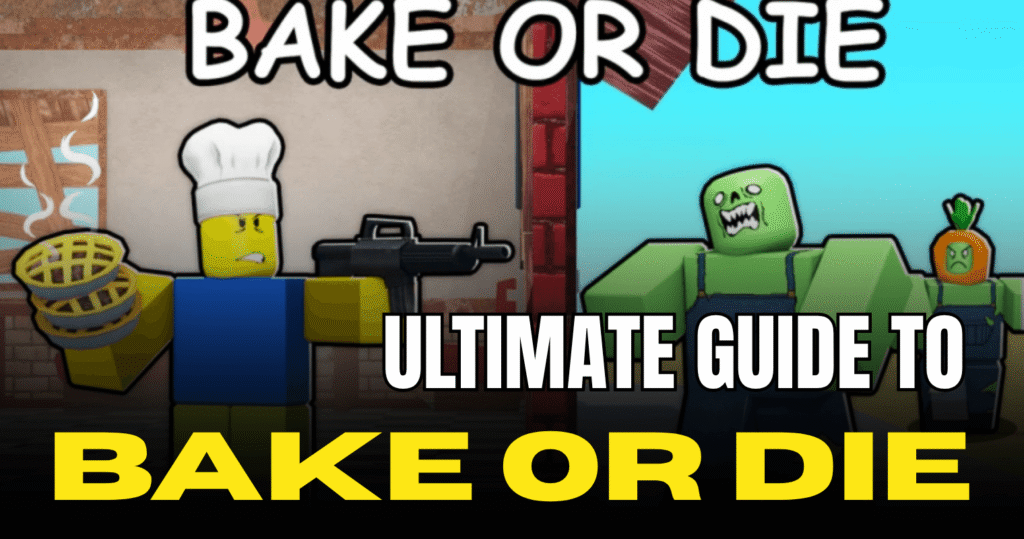
Bake or Die is a unique Roblox survival game that blends chaotic zombie combat with quirky baking mechanics. Developed by Big Bakers, it drops you into a desert diner where you must defend your pie shop from nightly hordes of undead while harvesting their remains to craft and sell pies for cash. The loop is simple yet addictive: explore and scavenge by day, fortify and fight by night, all while upgrading your base, weapons, and defenses to survive longer. Its mix of horror-lite tension, resource management, and absurd humor—turning zombies into pie ingredients—has made it one of Roblox’s standout survival experiences since its 2025 launch.
This comprehensive beginner-friendly guide covers everything from your first day in the desert to tackling tough boss waves and endgame progression. You’ll learn core mechanics, optimal strategies, resource management, classes, upgrades, and hidden details that many basic tutorials miss.
Whether you’re just starting out or pushing for high-night leaderboards, this guide equips you with actionable tips to progress faster, avoid common pitfalls, and maximize your survival time. It draws from core gameplay systems, community insights, and update patterns to help you build a strong foundation while uncovering deeper layers like secret areas, special events, and efficient farming routes.
Game Information
| Detail | Information |
|---|---|
| Game Name | Bake or Die |
| Developer | Big Bakers |
| Platform | Roblox |
| Genre | Survival / Tycoon / Co-op Defense |
| Release Date | April 2025 |
| Players | Multiplayer (up to ~32) |
Getting Started
Joining the Big Bakers Roblox group is highly recommended, as the game encourages it for potential rewards or group perks (check in-game announcements). Liking the game on its Roblox page is also prompted and may tie into minor bonuses or events.
There is currently no active code redemption system in Bake or Die, so focus on in-game actions instead of hunting codes.
Essential first steps:
- Spawn in and familiarize yourself with the diner (your base). Locate key stations: ingredient processors (mixers/blenders), ovens for baking pies, sell counters, and the shop for purchases.
- During the day, explore the desert map to gather basic resources like scrap and ingredients while killing early zombies for meat drops.
- Pick up zombie corpses or meat, process them into usable ingredients, mix recipes, bake pies, and sell them quickly for Nuggets (the main currency).
- Use earnings to buy starter weapons, repair tools, or basic defenses.
- Choose or unlock a Class early—each provides a unique starter tool and playstyle bonus (more on this below).
Starting tips: Prioritize speed. Baking pies is your primary income source, so practice fast movement between stations. Don’t hide inside the shop at night; position yourself at the front or defended areas to funnel zombies efficiently without letting them scatter through windows or side entries. Focus on basic upgrades like boards, barricades, and simple traps first.
Progression & Leveling Roadmap
Progression revolves around surviving successive nights while building economic power during the day. Days are for farming resources, crafting high-value pies, upgrading your diner defenses, and exploring for better loot or secret areas. Nights bring escalating zombie waves that test your fortifications and combat skills.
Optimal early roadmap:
- Nights 1-5: Basic zombies. Focus on learning pie recipes, farming scrap/ingredients, and buying initial weapons and window/door reinforcements.
- Nights 6-10: Faster zombies appear. Invest in barricades and basic turrets. Prepare for the first major boss around Night 10 (Scarecrow).
- Nights 11-15: Special zombies (e.g., eggplant, orange variants) and tougher threats. Unlock better guns and auto-turrets via the Technician class or shop.
- Nights 16+: Boss waves intensify (Doomberry, Rat King, Chicken Boss, etc.). Coordinate with teammates, use advanced upgrades, and explore new areas like the Laboratory or Sewers for powerful items.
Farming methods: Kill zombies for meat drops (different types yield different pie values). Collect scrap metal for shop purchases and upgrades. Efficient daytime loops involve quick exploration routes, processing meat rapidly, and chaining pie bakes/sales. Higher-value pies (using rarer meats) sell for more Nuggets and can have better customer demand. Restarting runs after reaching certain milestones (e.g., Night 25+) can sometimes be more efficient for leaderboard grinding than pushing endless waves alone.
Core Gameplay Mechanics
The Diner/Base: Your central hub. Upgrade doors, windows, walls, and add traps/turrets to slow or damage incoming zombies. Repair damage using tools like the Iron Repair Hammer (starter for Repairman class). Economy management is key—balance spending on defenses versus offensive weapons and ingredient processors for faster baking.
Combat & Defenses: Zombies attack your shop at night. Use melee (katana, cutting board) or ranged weapons (revolver, M4, golden gun, raygun, exo gun). Place turrets and traps strategically to create kill zones. Earnings often come from both pie sales and combat performance (kills may grant bonuses).
Classes (Power Scaling): Classes are unlocked/purchased with Nuggets or achievements and define your starter tool and strengths:
- Baker: Cutting Board (melee focus).
- Medic: Bandage (healing/support).
- Gunslinger: Revolver (ranged start).
- Repairman: Repair Hammer.
- Ninja: Katana.
- Juggernaut: High health, no starter tool.
- Later classes like Technician unlock upgraded auto-turrets.
Experiment with classes to match your preferred style—solo defense, team support, or aggressive farming. Upgrades and items further scale your power through better guns, armor, or perks.
Special Systems & Resources
Pies & Ingredients: Core economy loop. Process zombie meat in mixers, combine with other finds (e.g., golden carrot, mysterious ingredients), bake in ovens, and sell. Rarer zombie types or exploration drops create premium pies with higher Nugget yields.
Scrap & Nuggets: Scrap for crafting/repairs and shop buys; Nuggets for permanent or run-based upgrades and class unlocks.
Exploration & Secret Areas: Beyond the diner, explore the desert for loot, saveable NPCs (potential rewards), and hidden locations like the Laboratory (new events/bosses), Sewers, Evergreen areas, or factor-like zones with door codes (community-shared or discovered via bosses). These often contain powerful weapons (raygun) or unique ingredients.
Revive Systems: Revive kits for self or teammates help in co-op runs.
No traditional rebirth/prestige is prominently featured yet; progression is night-based with leaderboard focus on highest survived nights or total earnings.
Maps, Stages, & Progression Unlocks
The main map centers on your desert diner with surrounding exploration zones. New updates frequently add areas (Laboratory, Sewers, barns, etc.) that unlock through progression or specific nights/events. Access higher-difficulty content or bosses by surviving to certain nights or completing exploration objectives. Limited-time or update events introduce special spawns, new zombie variants, or themed challenges with exclusive rewards.
Tips, Strategies & Best Practices
- Daytime efficiency: Master quick pie production cycles. Move fast between killing, processing, baking, and selling.
- Night defense: Funnel zombies by partially opening doors or using barricades—avoid letting them breach windows and scatter. Stand at defended fronts rather than deep inside.
- Resource balancing: Prioritize defenses early, then offensive power. Save premium pies for tough boss nights.
- Combat: Learn zombie patterns (speed, health, special attacks). Use melee for close crowds, guns for distance. Coordinate team roles (one repairs, one bakes, others DPS).
- Prioritization: Unlock better guns (golden gun, raygun) and turrets quickly. Explore for secret codes/items during safer daytime windows.
- Risk management: Don’t overextend exploration if your base is weak. Restart strategically for better runs if nights become unsustainable.
For endgame: Optimize loadouts for specific bosses, stack perks from vending machines (Sewer update), and focus on leaderboard metrics like total nights or pies sold.
Events, Schedules & Special Spawns
Zombie waves escalate nightly with special variants (mushroom, eggplant, orange, mutant). Boss fights appear at set intervals (Scarecrow ~Night 10, Doomberry, Rat King, Chicken Boss, etc.). Updates introduce events like Laboratory incursions or themed spawns with rare drops (golden carrot). Check in-game or Discord for timed multipliers or admin events. Maximize by preparing high-damage setups and team coordination beforehand. Rare spawns during exploration yield unique ingredients or weapons.
Combat Paths & Styles
Beginner: Rely on class starter tools and basic shop guns. Mid-game: Mix melee clears with ranged support and turret placement. Endgame: Specialized builds—Technician for turret dominance, Gunslinger for high DPS, or hybrid support with Medic/Repairman. Master positioning, kiting hordes, and boss mechanics. Unique abilities come from weapons (raygun effects) or class perks rather than traditional skill trees.
Additional Important Game Data
- Hidden mechanics: Some areas require specific codes discovered via boss fights or exploration (e.g., 1229 or similar for certain doors—verify in current patch). Standing in certain spots at night can increase vulnerability.
- Timers: Strict day/night cycle; use every second of daylight efficiently. Boss spawn windows are somewhat predictable after certain nights.
- Passive bonuses: Class perks, potential group benefits, and vending machine perks (Sewer update) provide ongoing advantages.
- Inventory/Storage: Manage carried ingredients and tools; efficient processing reduces clutter.
- Trading/Economy: Primarily solo or co-op within servers; Nuggets drive the shop meta.
- Gamepasses: Check for premium impacts on earnings, starting resources, or exclusive items (standard Roblox model).
- Update patterns: Big Bakers frequently adds new bosses, areas (Lab, Sewers), zombie types, and quality-of-life features. The meta shifts toward better turret integration and exploration rewards. Diminishing returns may apply to overly repeated basic farming—diversify with exploration.
- NPCs: Saveable people can offer minor interactions or rewards; zombies have varied drop tables based on type.
These details help experienced players optimize beyond surface-level grinding.
Frequently Asked Questions
How do I make money fast in Bake or Die?
Focus on rapid pie production using common zombie meat early on, then switch to premium recipes with rarer drops. Efficient movement and selling immediately after baking maximizes Nuggets.
What is the best class for beginners?
Gunslinger or Baker for straightforward combat and baking synergy. Unlock others as you earn Nuggets for variety.
How do I unlock new areas or bosses?
Survive to specific nights and explore thoroughly during the day. Some zones or events trigger after milestones or via secret codes from boss encounters.
Can I play solo or is it better in a group?
Solo is viable for learning and shorter runs, but co-op shines for longer survival, base repairs, and boss fights due to role division.
What should I prioritize upgrading first?
Basic defenses (doors/windows/barricades), a reliable weapon, and ingredient processing speed. Turrets become crucial mid-game.
Are there codes or free rewards?
No active redemption system currently. Join the group and Discord for announcements on future features or events.
How do I defeat tough bosses like Doomberry or Chicken Boss?
Prepare high-damage weapons (golden gun, raygun, upgraded turrets), coordinate team fire, and use the environment. Save strong pies or buffs for these waves.
Personal Gameplay Observation
After dozens of nights, the real satisfaction comes from nailing that perfect daytime loop—clearing a path, hauling meat back, and churning out pies just before the sun sets. The tension spikes when a surprise special zombie breaches a weak spot, but nothing beats surviving a boss with a half-broken diner and a full cash register. Experiment early; the best builds often mix unexpected class synergies with smart exploration.